Published:
When you breastfeed, your milk is always warm and ready for your baby. If that’s not possible, you’ll want to pump and store breast milk for the times you’re away from your baby. You can store pumped milk in the refrigerator, the freezer, an insulated bag, and—for a limited amount of time—at room temperature.
Here are some answers about breast milk pumping and storage, including what to store breast milk in, how much to store, how long to store it, and some other common questions about using stored milk for your baby. From temperature to timing, cooling and warming, this information can help you get started.
Tip: Making it work for you
Next to breastfeeding, freshly expressed milk is best. If you’ve just pumped, give that milk to your baby first (before thawing frozen milk) when you and your baby are going to be apart.

What kind of containers should I use to store breast milk?
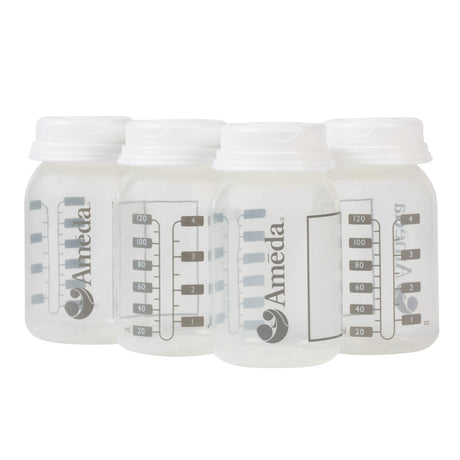
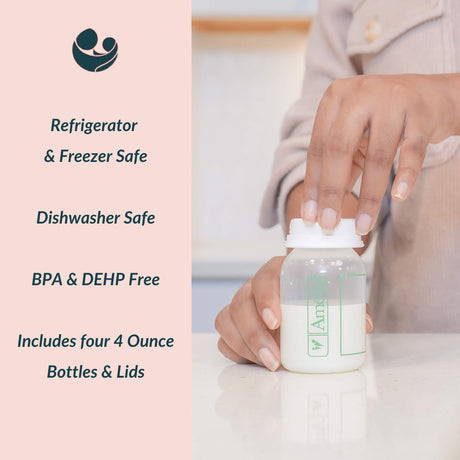
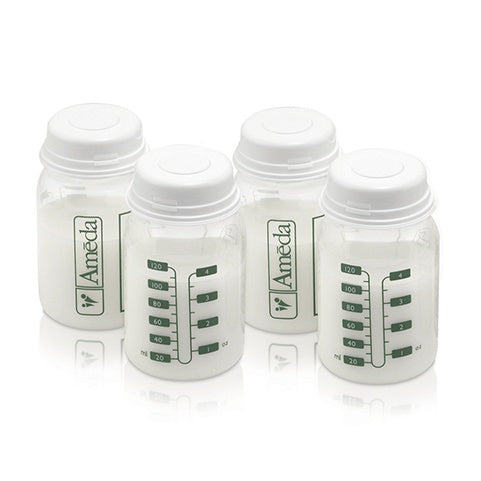
A range of clean breast milk storage bottles works well for storing breast milk. Here are some suggestions:- Glass with leak proof lid
- Hard, BPA-free plastic
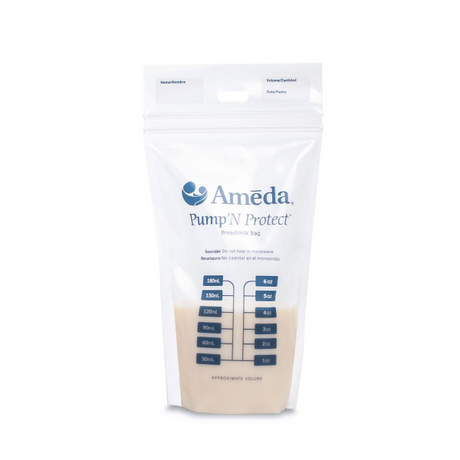
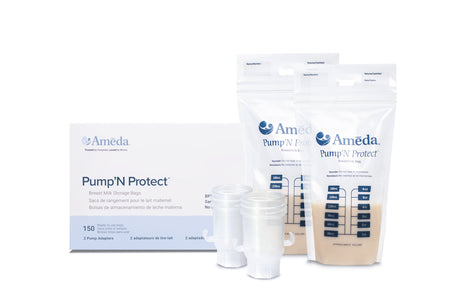
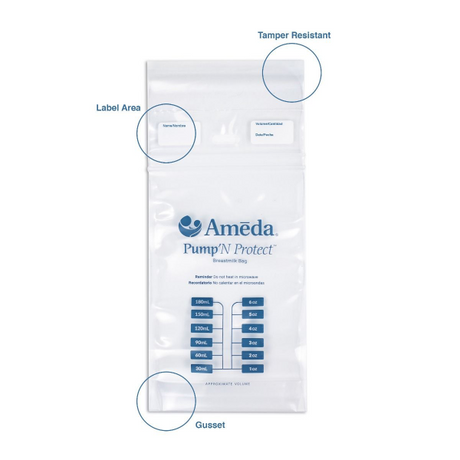
- Breast milk freezer bags
You’ll want to avoid thin disposable feeding bottle liners or plastic sandwich bags for storing milk in the freezer because they can split when frozen.
How much breast milk should I store in each container?
Fill and store each container with the smallest amount of breast milk your baby is likely to take. It is better to warm up more milk than to have to throw away any leftover milk in the container. Here are some general guidelines that can be helpful:
- For babies 1-2 weeks old, 2-3 oz. (60-90 mL) per feeding
- For babies 1-6 months, 3-5 oz. (90-150 mL) per feeding
Tip: Making it work for you When freezing your milk, always leave room at the top of the container. As liquids freeze, they expand, and breast milk is no exception. Leaving space for this to happen can help make your life easier.

How long can I store breast milk?
That depends on where you store it. For healthy babies who are at home, check the breast milk storage guidelines table. If your baby is in the hospital (preterm or sick), check with your baby’s health care provider for advice about milk storage.
While it’s true that the longer your milk is stored, the more vitamins and antioxidants it loses, it’s also true that stored breast milk still has more health benefits than formula, so it’s worth it to continue to pump and store milk for your baby.
- If you plan to use your milk within 8 days, you can store it in the refrigerator. Otherwise, store it in the coldest part of the freezer, where it can remain for up to four months.
- Never store your breast milk in the door compartment of the refrigerator or freezer. It is more likely to defrost or become too warm there.
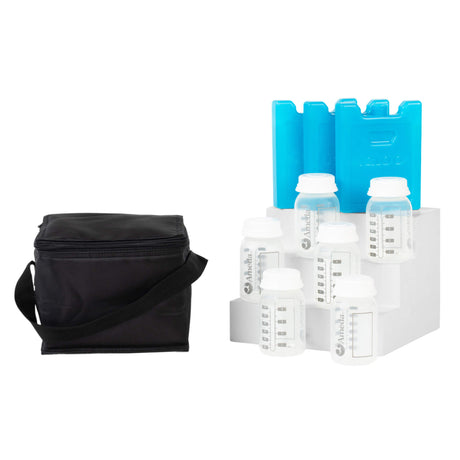
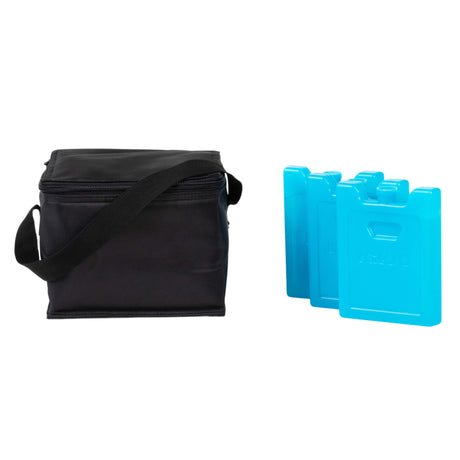
- Freshly pumped milk can be stored in a cooler with frozen ice packs for up to 24 hours.
- If you follow the timeframes in the breast milk storage guidelines, you can keep your milk at room temperature, then refrigerate it, and then freeze it.
Breast milk storage guidelines NOTE: When thawing frozen milk, label as thawed when completely thawed (i.e. no ice crystals present). Use the time when completely thawed to base acceptable time limits for use rather than when it is taken from the freezer. These guidelines for storage and thawing of breast milk are a recommendation. Contact your lactation consultant or breastfeeding specialist for further information.
| Room Temperature 77 °F(25 °C) | Time in Refrigerator 39 °F(4 °C) | Time in Freezer 0 °F(-18 °C) | |
| Fresh Expressed or Pumped | Up to 4 hours | Up to 4 days | 6 months - Best 12 months - Acceptable |
| Thawed, Previously Frozen | 1-2 hours | Up to 1 day (24 hours) | Do Not Refreeze |
| Leftover from Feeding (baby did not finish bottle) | Use within 2 hours after the baby is finished feeding | ||
Storage times may vary for premature or sick babies.
https://www.cdc.gov/breastfeeding/breast-milk-preparation-and-storage/handling-breastmilk.html*Storage times may vary for preterm or sick babies. Sources: Jones, F. , Best Practice for Expressing, Storing and Handling Human Milk in Hospitals, Homes and Child Care Settings. Raleigh, NC: Human Milk Banking Association of North America, 2011; Mohrbacher, N. Breastfeeding Answers Made Simple: A Guide for Helping Mothers. Amarillo, TX: Hale Publishing, 2010.
Tip: Making it work for you
Label your milk storage containers with the date and time using a sticky label or non-toxic marker. When you’re choosing frozen milk, use the oldest first. If your baby is at a facility that cares for other babies or toddlers, be sure to include your baby’s name on the label to avoid confusion.
Other common questions about using stored breast milk
- Do I need to warm up my baby’s milk? If you have a newborn baby who needs milk given in a bottle, warm the milk up by placing in a cup of warm water. Test it to make sure it is not too hot before giving it to your baby. If your baby is a few months old, you can give chilled milk right out of the refrigerator. Some older babies still prefer warm milk, so if your baby does, warm the milk up by placing in a cup of warm water and then test it to make sure it is not too hot before giving it to your baby.
-
How do I thaw my frozen milk? Place frozen milk in the refrigerator the night before you plan to use it. Use this milk within 24 hours of thawing.
- You can heat breast milk in a cup of warm water right before you plan to give it to your baby.
- Never use hot or boiling water to warm up your milk. It can make the milk too hot and burn your baby’s mouth and throat.
- Never microwave your milk because microwaving can cause hot spots in the milk.
- Can I add freshly expressed milk to stored frozen milk? Yes! Cool the fresh milk in the refrigerator before adding to already refrigerated or frozen milk. Use the date of the oldest expressed milk to determine the expiration date.
- My thawed milk has a soapy odor. What’s up with that? Is it spoiled? Probably not. Spoiled milk will smell spoiled. A soapy odor does not mean it is spoiled. Some mothers make milk high in lipase, an enzyme that digests fat. When thawed, the frozen milk of these moms has a strong, soapy smell. This milk is safe for your baby to drink but sometimes your baby will refuse this milk. If this happens, you can deactivate the lipase by scalding the milk first before freezing it. To scald your milk, heat it in a pot on the range just until bubbles form at the edges, then cool and freeze it.
- How can I store breast milk at work? In general, if breast milk is stored in a room that’s 66°-72° F (19°-22° C), it can stay uncooled for 6 to 10 hours. If you need to cool breast milk, use an insulated pump cooler case, cooler bag, or refrigerator.
To learn more about breast pumping and breastfeeding, check out these articles:
This is general information and does not replace the advice of your healthcare provider. If you have a problem you cannot solve quickly, seek help right away. Every baby is different. If in doubt, contact your physician or healthcare provider.