

-
![An outline illustration of a human hand with an open palm, positioned slightly upwards, and a heart shape above it. The heart is centered and appears as if it's gently floating above the hand, symbolizing care or compassion. The style is minimalistic and uses a dark color against a light background.]()
For Mom
Reduced risk of postpartum depression, type II diabetes, and breast or ovarian cancer.
-
![An illustration of two simplified human footprints, facing upward, with a dark teal color. The footprints display five toes each and are presented in a stylized and minimalist design.]()
For Baby
Lower risk of colds, asthma, ear infections, diabetes, obesity, and skin-related conditions.
-
![Icon depicting three stylized human figures. The figure in the center is larger and represents the primary subject, while the two figures on either side are smaller and positioned slightly behind. All figures are circular and are colored in a dark teal shade against a plain background.]()
For the Community
More cost effective and less wasteful compared to feeding with formula.




Breastfeeding 101
How Milk Production Works
The more frequently you breastfeed or pump, the more milk you’ll make. Hormones play a key role in milk production. Every time you breastfeed or pump, your body releases the hormone prolactin. With each release, your body makes and stores more milk in the breast. If the level of this hormone gets too low, your milk supply will decrease. This is why it is important to breastfeed or pump right after delivery and then at regular time frames. Initially this is about eight times every 24 hours.
It is also very important to drain your breast fully when feeding your baby. A drained breast produces milk quickly, while a full breast produces milk slowly. Most mothers have an average of four milk ejection reflexes during a breastfeeding session.
Common Breastfeeding Positions
-
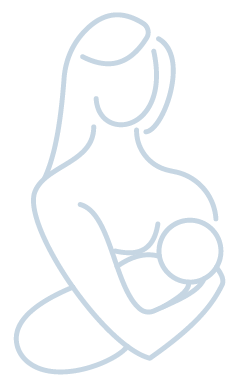
![A simple, minimalistic line drawing of a woman holding an infant close to her chest. The woman has long hair and is depicted in a seated position, with her body angled slightly to one side. The outline is smooth and stylized, emphasizing the connection and warmth between the mother and child.]()
Clutch Hold
An upright position, holding your baby facing you with his or her feet tucked under your arm.
-
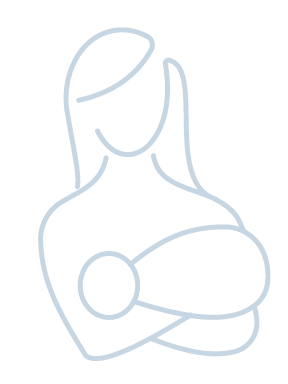
![A simple line drawing of a woman holding a baby in her arms. The woman has long hair and is depicted in a side view, with a gentle smile on her face. The baby is cradled against her chest, emphasizing a nurturing and protective pose. The image uses a light blue outline on a white background, suggesting a calm and loving atmosphere.]()
Cradle or Cross-Cradle
The front of your baby touches your front, on his or her side, while he or she lays in your lap.
-
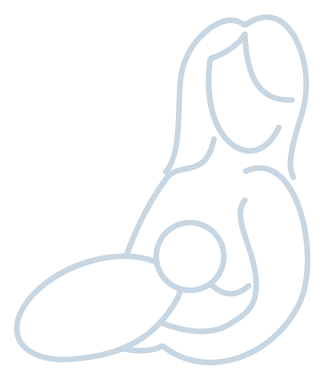
![A simple line drawing of a woman sitting, holding a baby in her arms. The woman has long hair and a gentle expression, while the baby is depicted as a circular shape. The illustration has a minimalist design, using thin blue lines on a white background.]()
Laid Back Hold
Laying down comfortably, your baby will rest on top of your chest while you support them.
-
![A simple line drawing of a relaxed figure lying down with one arm extended, resting on a circular object. The figure has a loosely curled position and appears calm, conveying a sense of rest or comfort.]()
Side-Laying Hold
Laying on your side, facing your baby while supporting your baby with your arm to prevent rolling.

Frequently Asked Questions
How often should I breastfeed my baby?
How often should I breastfeed my baby?
Feeding frequency for newborns, particularly those who are breastfed, is indeed quite high, typically ranging from 8 to 12 times in a 24-hour period. Babies feed frequently because breast milk is quickly digested, and their small stomachs can only hold a small amount at a time. It's crucial for parents to respond to their baby's hunger cues, which can include rooting, sucking on fists or fingers, and fussiness.
As babies grow and their stomach capacity increases, they may begin to breastfeed less frequently, but it's essential to continue feeding on demand and responding to hunger cues. Each baby is different, so there's no set schedule for when feeding frequency will decrease—it varies from child to child.
How will I know how much milk my baby is getting if I breastfeed?
How will I know how much milk my baby is getting if I breastfeed?
Easy. What goes in must come out! You will know how much your baby is getting by how often he has wet and dirty diapers. Healthy weight gain is also a good sign that your baby is getting what he needs. You don’t need to know exactly how much your baby takes. You only need to know that your baby is thriving. This can simplify life with a newborn.
How Long Should I Breastfeed? New Breastfeeding Guidelines Released by the AAP
How Long Should I Breastfeed? New Breastfeeding Guidelines Released by the AAP
The American Academy of Pediatrics (AAP) released new breastfeeding recommendations in June 2022. These new recommendations support mothers to continue breastfeeding for two years or beyond. The recommendations align with guidelines provided by the World Health Organization (WHO), the American Academy of Family Physicians (AAFP), and the Canadian Pediatric Society.
Learn more here:
Latest Breastfeeding Posts


Understanding Nipple Thrush While Breastfeeding
Nipple thrush is a fungal infection that can cause burning, itching, or pain during breastfeeding. Learn the signs, other possible causes of nipple pain, treatment options, and when to contact a healthcare provider or lactation specialist.