
Published:
September is NICU Awareness Month, a time dedicated to acknowledging the challenges, honoring the experiences, and providing support for babies, families, and medical professionals impacted by a stay in neonatal intensive care units (NICUs). It’s estimated that about 13 percent of babies born in the United States will spend time in a NICU, some for extended periods of time.
Medically fragile babies need mother’s milk, but they may not be able to coordinate sucking, swallowing, and breathing for a while. They can receive colostrum and breast milk through a feeding tube or syringe, though! Here are some tips to help mom get started with pumping for a baby in the NICU and to build up to full milk production with a pump.
Start pumping within six hours of giving birth, if possible. Research has shown that moms who pump within one hour of birth have their milk come in sooner and are more likely to develop a greater supply of milk. The first few days, you’ll only produce drops or teaspoons of colostrum. This first milk is small in quantity but is liquid gold – tiny and mighty – like your baby!
Aim to double-pump (from both breasts at once) 8-10 times every 24 hours. You want to pump as often as your baby would be nursing – every 2-3 hours. You could pump every three hours around the clock or every two hours during the day with one or two pumping sessions, no more than five hours apart, overnight. Breastmilk is a supply and demand production – the more milk you take out, the more your body will make! You may pump more milk than your baby can consume early on, but it’s important to maintain pumping to build your milk supply.
Boost your production: If your milk supply is low:
- Ask if your hospital has a lactation consultant on staff.
- Check your breast flange fit. It could be too big or too small. A lactation consultant can help you find the right fit.
- Pump next to your baby or while holding your baby skin-to-skin. Your body may respond more to your baby than to the pump.
- Pump longer. Keep pumping for one or two minutes after the last drop of milk.
- Gently massage your breasts before you begin pumping.
- Be patient! Your body will adjust in time.
- Try cluster pumping – frequent, short periods of pumping. Babies often cluster feed before a growth spurt to increase mom’s milk production. Cluster pumping can do that same.
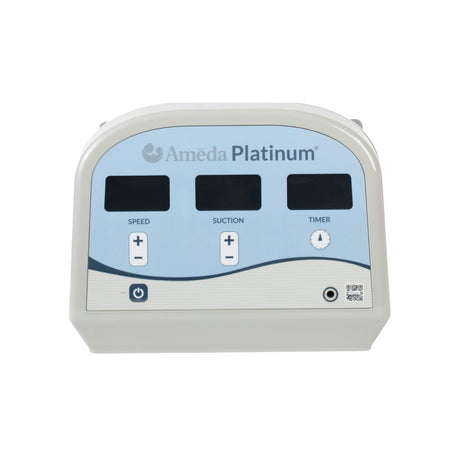
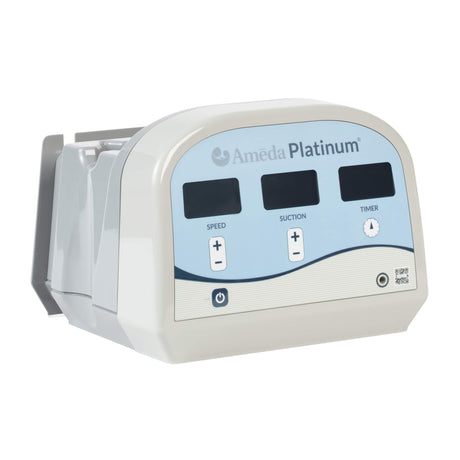
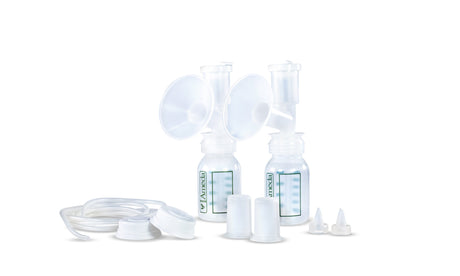
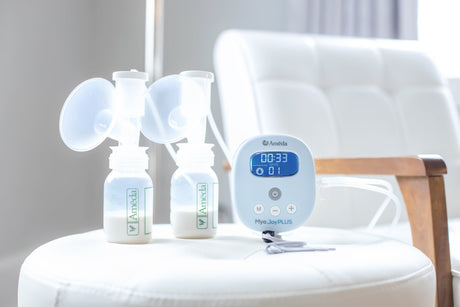
Choose the right pump: Your hospital will have a multi-user, hospital grade pump for you to use, or you can bring your own pre-selected pump from home. Ameda’s Platinum has been proven to help moms reach full milk production within two weeks. Ameda’s hospital pumps, the Platinum and Pearl, and home pumps, the Mya Joy and Mya Joy PLUS, use the same accessory kits making your transition from hospital to home easy, at least when it comes to adjusting to pump parts.